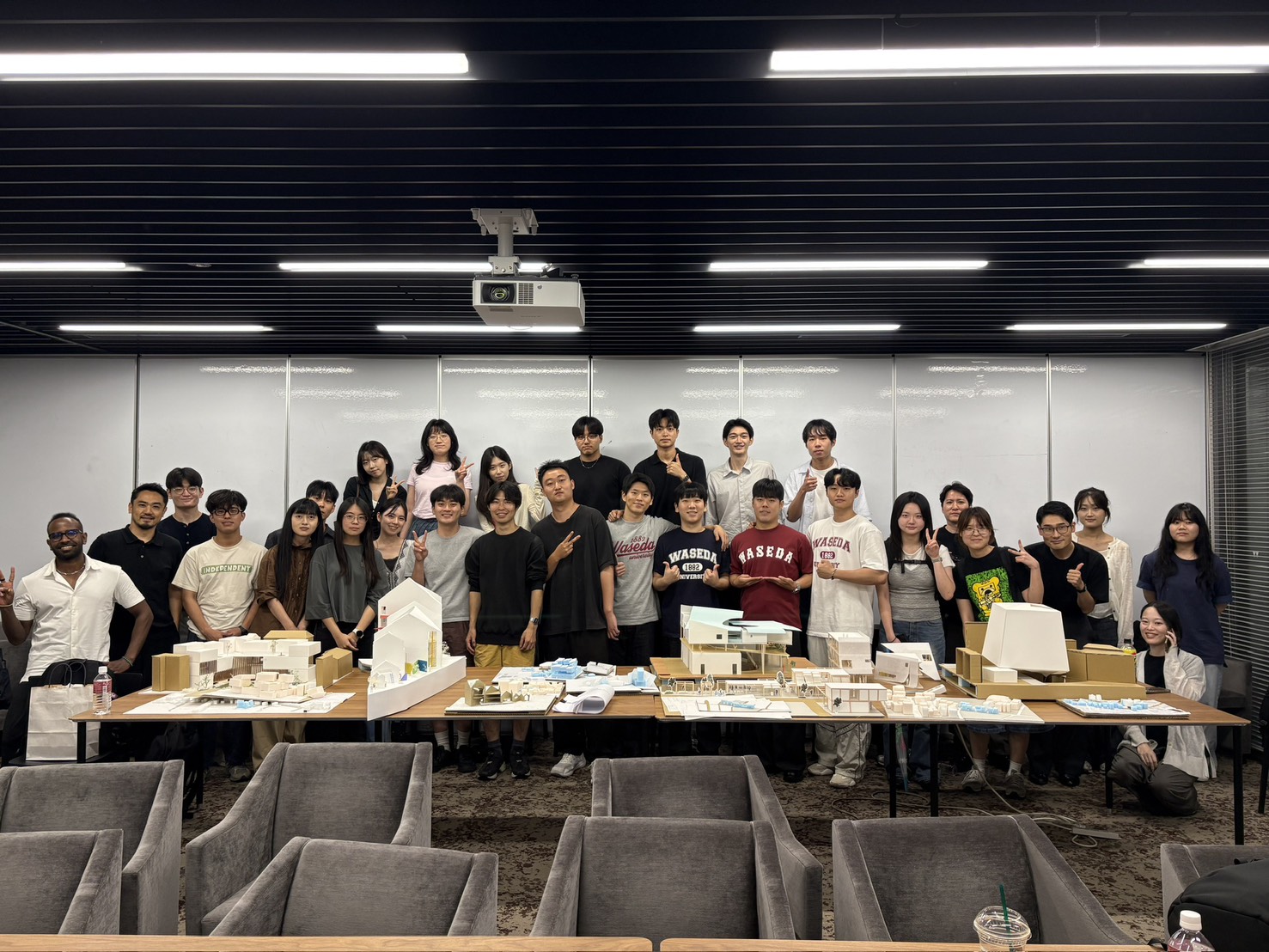
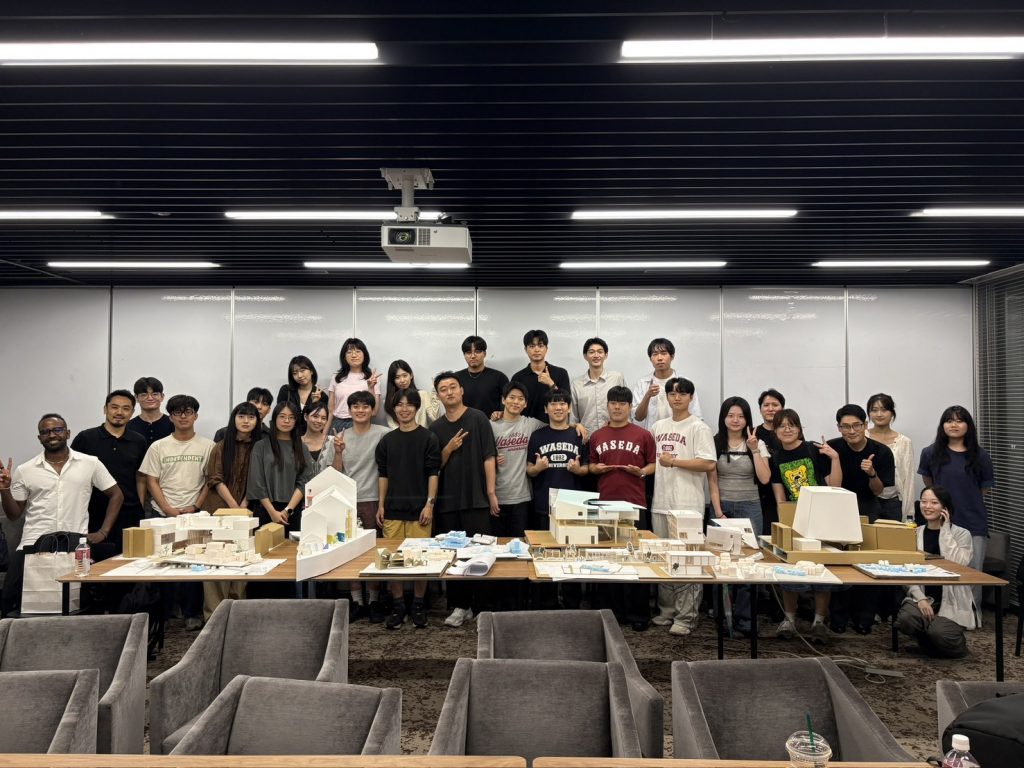
2026年7月21日から7月28日にかけて、東京の谷根千エリアにて1週間のワークショップを行いました。キョンヒ大学から16名、小林恵吾研究室からは9名が参加し、小林恵吾先生、Dongil Kim先生、アブジャーナ・バビカーさんを中心に開催されました。
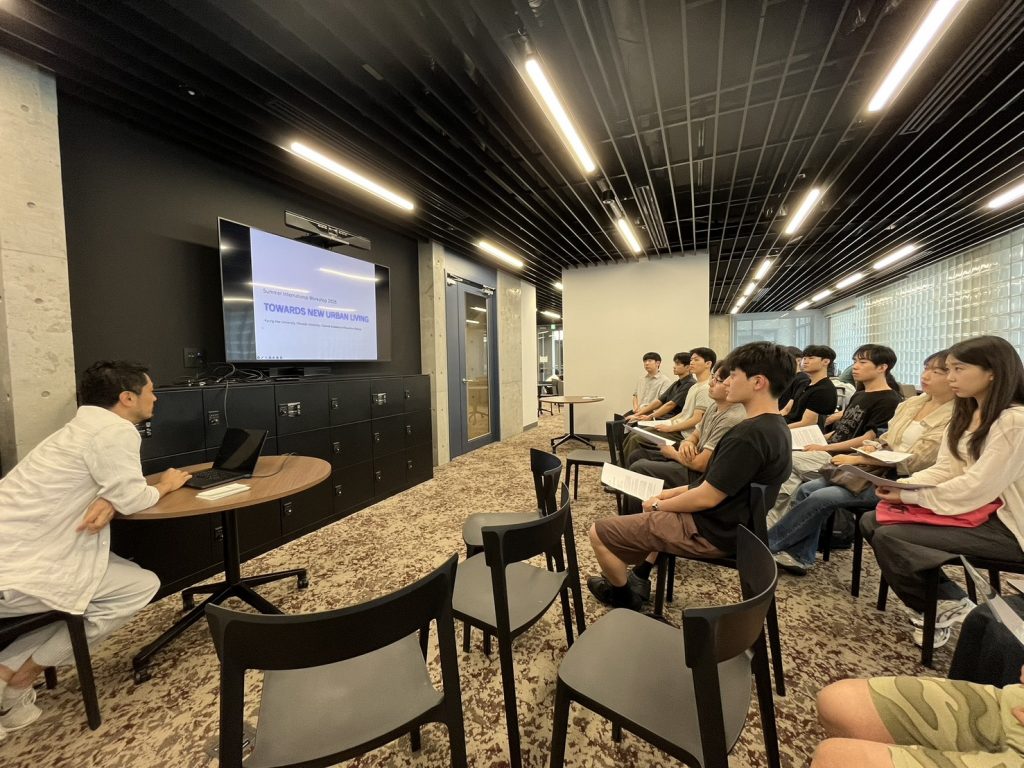
谷根千エリア(谷中・根津・千駄木)は、台東区・文京区・荒川区の境界に位置し、関東大震災や戦災を免れたことで歴史的な街並みや路地、強い地域コミュニティが残る地域です。近年は観光化やジェントリフィケーションが進み、地域の魅力を維持しながらコミュニティを継承していくことが課題であり、本ワークショップでは近年開発が進みつつある中で、どう街並みやコミュニティを維持しつつ、8ユニットの集合住宅を設計することが求められました。
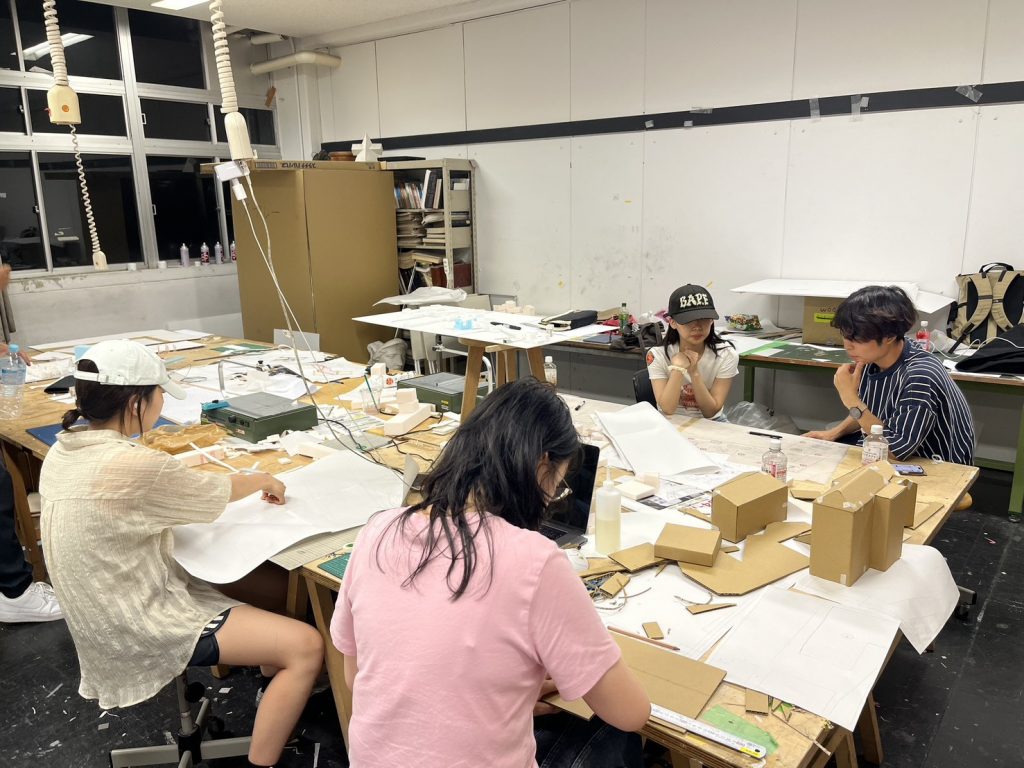
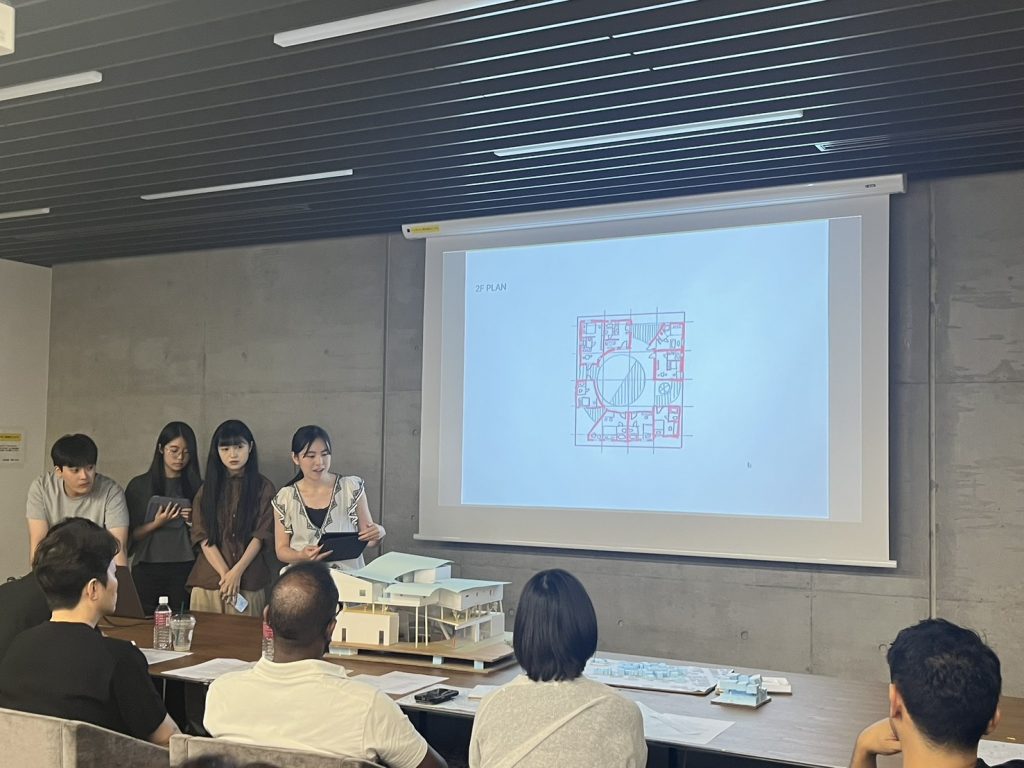
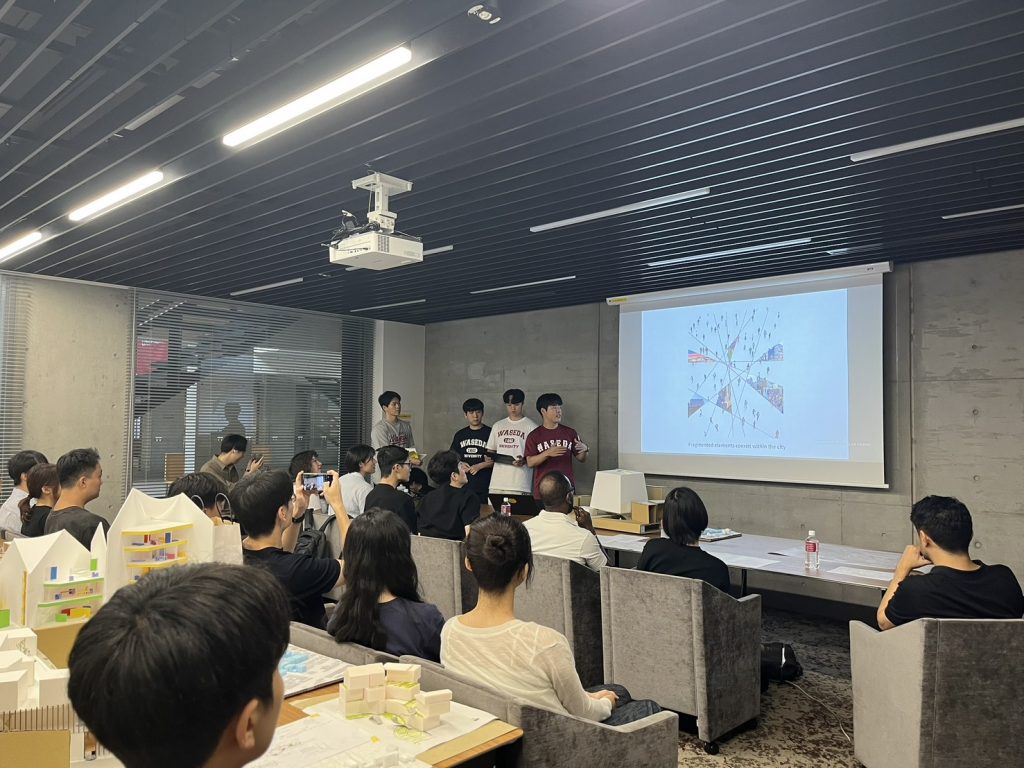
初日に谷根千エリアでフィールドワークを行い、全6グループ各々が興味を持ったテーマや敷地を見つけ、住空間だけでなく、オープンアトリエや共同キッチン、パブリックスペース、シェアガーデンなどを組み込んだ集合住宅を設計しました。
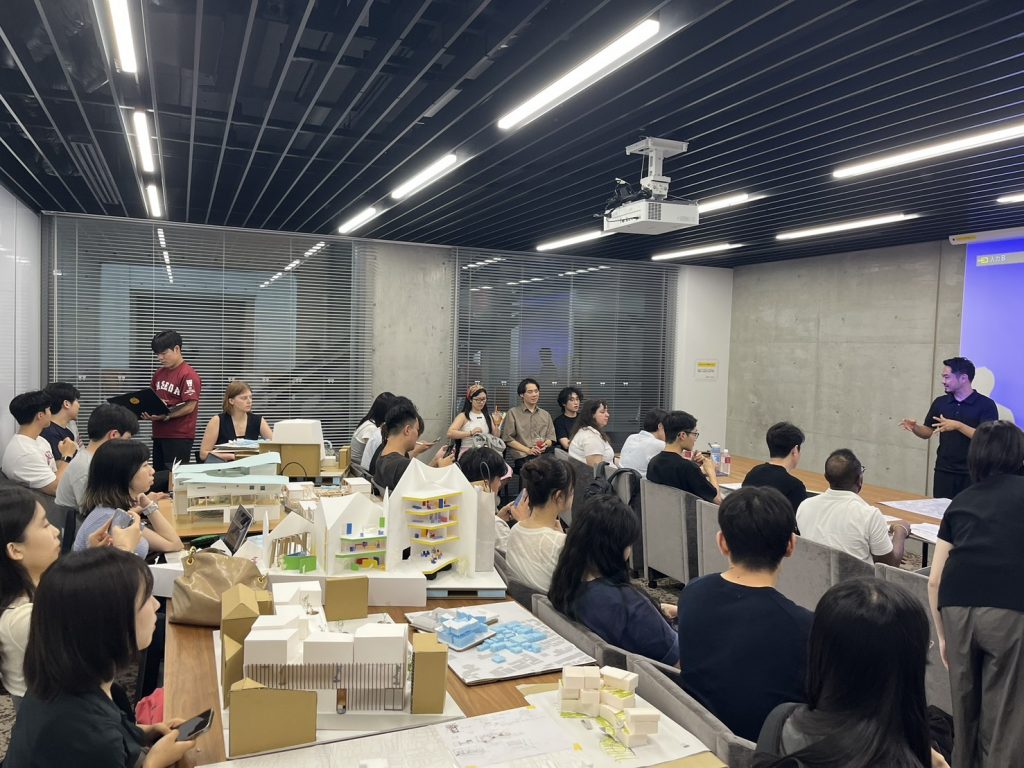
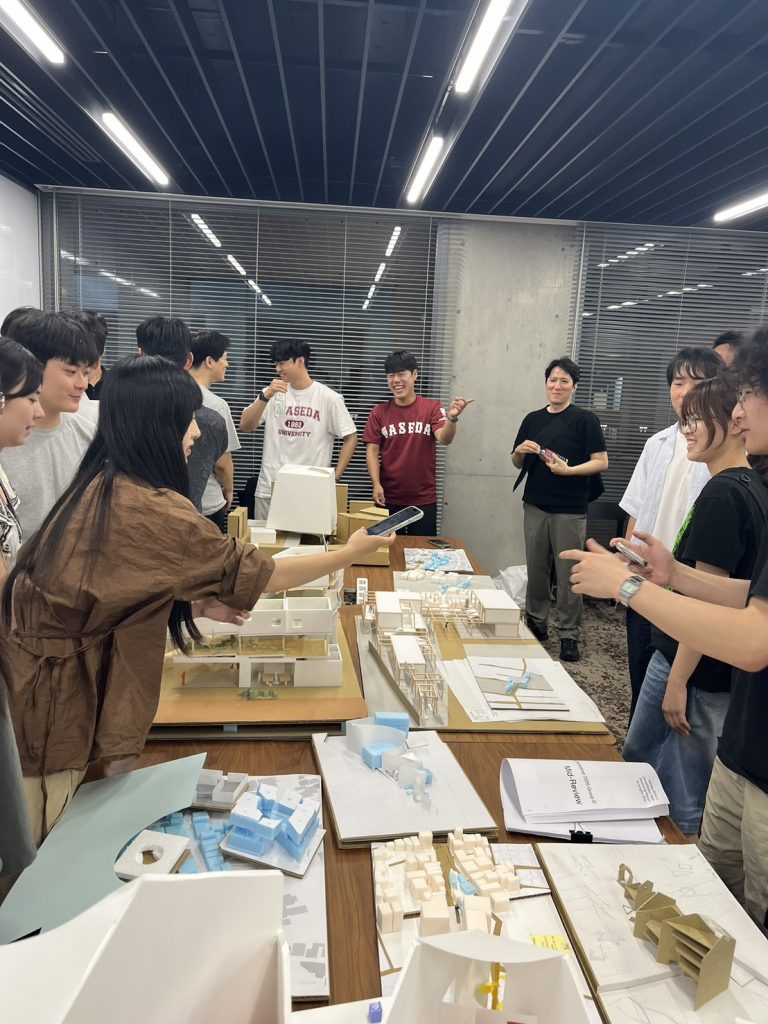
今回のワークショップでは、1週間という短期間で最終成果物として1/50模型を制作することを求められました。その中でスタディ模型やドローイングを通した議論を中心に話し合うことで、3Dモデリングが普及した現在でも、実際に手を動かして模型をつくることで、デジタルでは得られない発見や気づきが建築のアイデアを深めることを実感する機会となりました。また両学生ともに東京の現状や文化の違いを理解し、建築空間を考える素晴らしいワークショップとなりました。
From July 21 to 28, 2026, a week-long architectural workshop was held in Tokyo’s Yanesen area. Sixteen students from Kyung Hee University and nine from the Keigo Kobayashi Laboratory participated. The workshop was led by Professor Keigo Kobayashi, Professor Dongil Kim, and Abujana Babikar.
Yanesen, comprising Yanaka, Nezu, and Sendagi, lies near the boundaries of Taito, Bunkyo, and Arakawa wards. Having largely escaped the Great Kanto Earthquake and wartime destruction, the area retains its historic streets, narrow lanes, and close-knit communities. In recent years, however, growing tourism and gentrification have raised questions about how to preserve these qualities. Against this backdrop, participants were asked to design an eight-unit residential building that would sustain the area’s streetscape and community amid ongoing development.
On the first day, participants conducted fieldwork in Yanesen. Each of the six groups then selected a site and theme of interest. Their proposals combined housing with spaces such as open studios, communal kitchens, public areas, and shared gardens.
Despite the workshop’s short duration, each group was expected to produce a final model at a scale of 1:50. Discussions centered on study models and drawings, giving participants a chance to experience how making physical models can reveal insights that digital tools alone may not provide. Working together also helped students from both institutions deepen their understanding of Tokyo’s urban conditions and one another’s cultural perspectives while exploring new possibilities for architectural space.