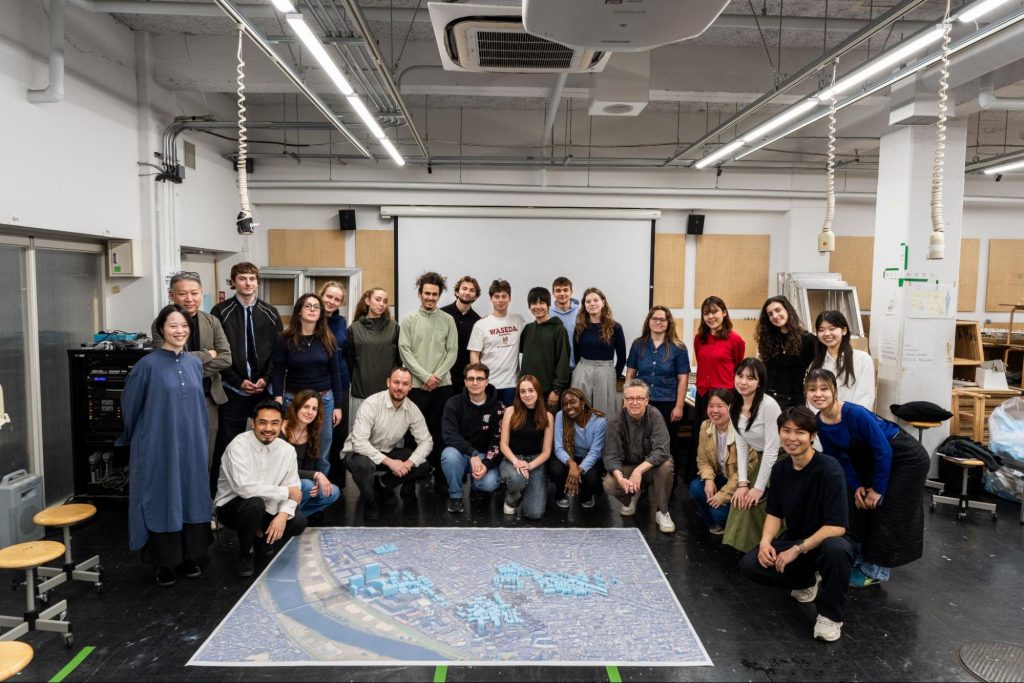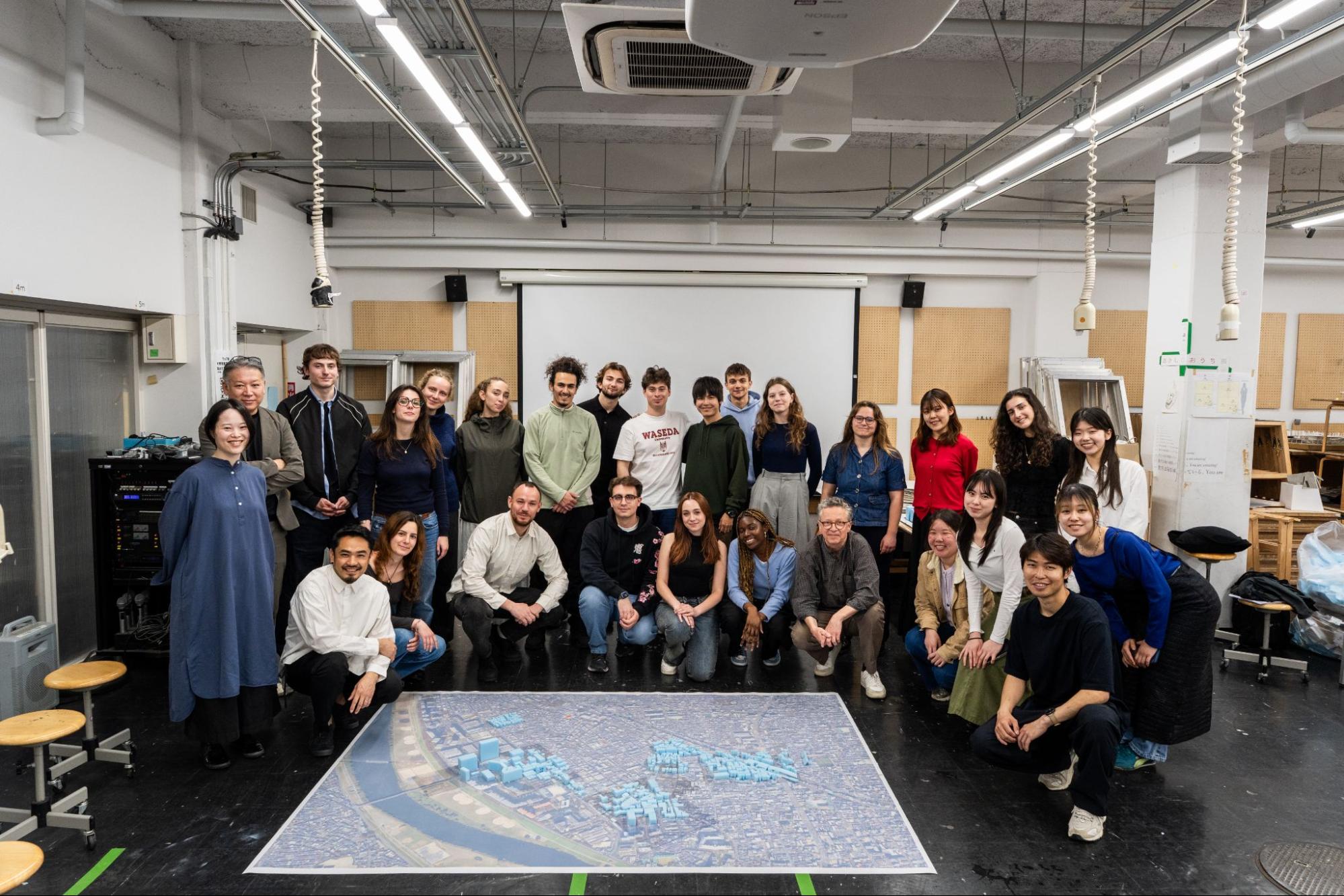
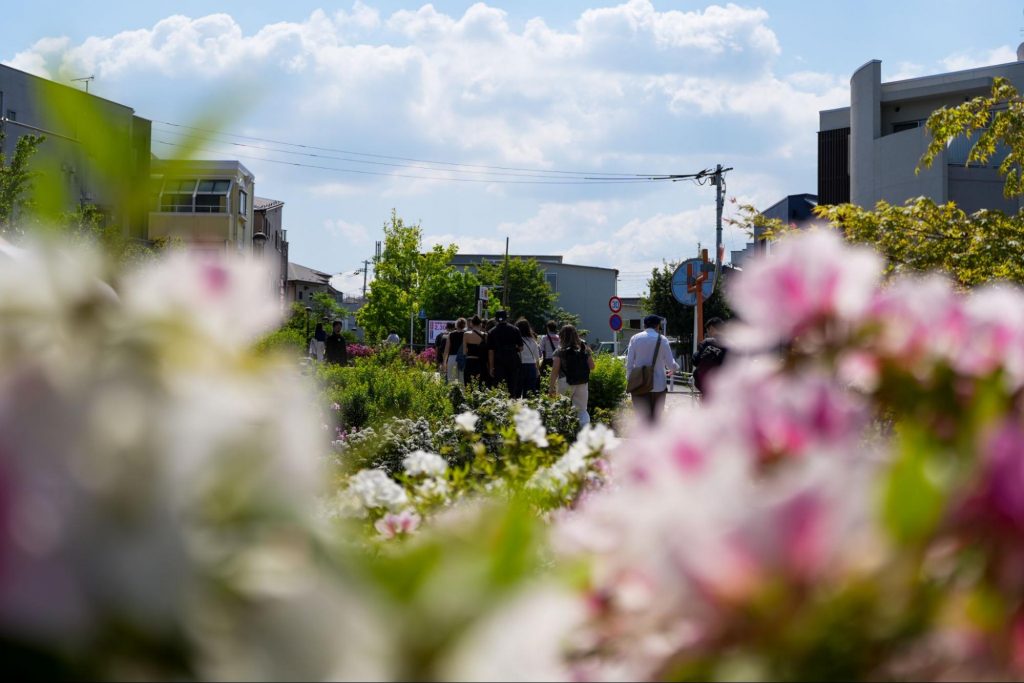
毎年4月に行われるヴェルサイユ大学との合同ワークショップが、4/13–4/24の期間に行われた。フィールドワークやレクチャーを交えながら、グループごとに設計提案を行った。
東京都大田区の下丸子エリアには町工場が多く存在し、職住一体による独特かつ趣深い空間が街の風景を形成している。地域に根差した製造業が住空間を伴って町に残ることが、豊かなコミュニティ形成に寄与しており、それらの空間のあり方を再考し未来に繋げていくことは大変重要であると考えられる。
ヴェルサイユ大学の学生が事前に入念なリサーチを行い、設定された6つのテーマごとの対象敷地において、各テーマに沿った設計提案を行った。
グループ1:UDC・O (Urban Design Center・Ota)プラットフォーム
グループ2:共有型物流拠点の形成
グループ3:リスク対策と技能継承のためのコミュニティ空間
グループ4:大田区における生産性インターフェイス
グループ5:職住一体型RCFの継続
グループ6:コミュニティ生活
グループ7:再生機能によるローカルコミュニティの形成
食事やフィールドワークを共にする中で、両校の学生にとって、建築にとどまらず幅広い学びを得られる二週間となった。
The annual joint workshop with the University of Versailles, held every April, took place from April 13 to April 24. Combining fieldwork and lectures, each group developed design proposals.
The Shimomaruko area in Ota Ward, Tokyo, is home to many small local factories, and the unique, charming spaces created by the integration of work and living spaces shape the town’s landscape. The presence of locally rooted manufacturing industries coexisting with residential spaces contributes to the formation of a vibrant community, and it is considered crucial to rethink the nature of these spaces and carry them forward into the future.
Students from the University of Versailles conducted thorough preliminary research and developed design proposals aligned with each of the six designated themes for the respective sites.
【敷地調査】
ヴェルサイユ大学の学生が事前に選定した敷地を実際訪れ、各敷地の現状や周囲の建物を観察した。各テーマごとにグループに分かれ、メンバー同士で話し合いながら、敷地周辺地域をより良くするためのアイデアを考えた。
【Site Research】
We visited sites that were selected beforehand by the students of the University of Versailles in person, observing the current conditions of each site and the surrounding buildings. Divided into groups by theme, members discussed with one another and came up with ideas to improve the areas surrounding each site.
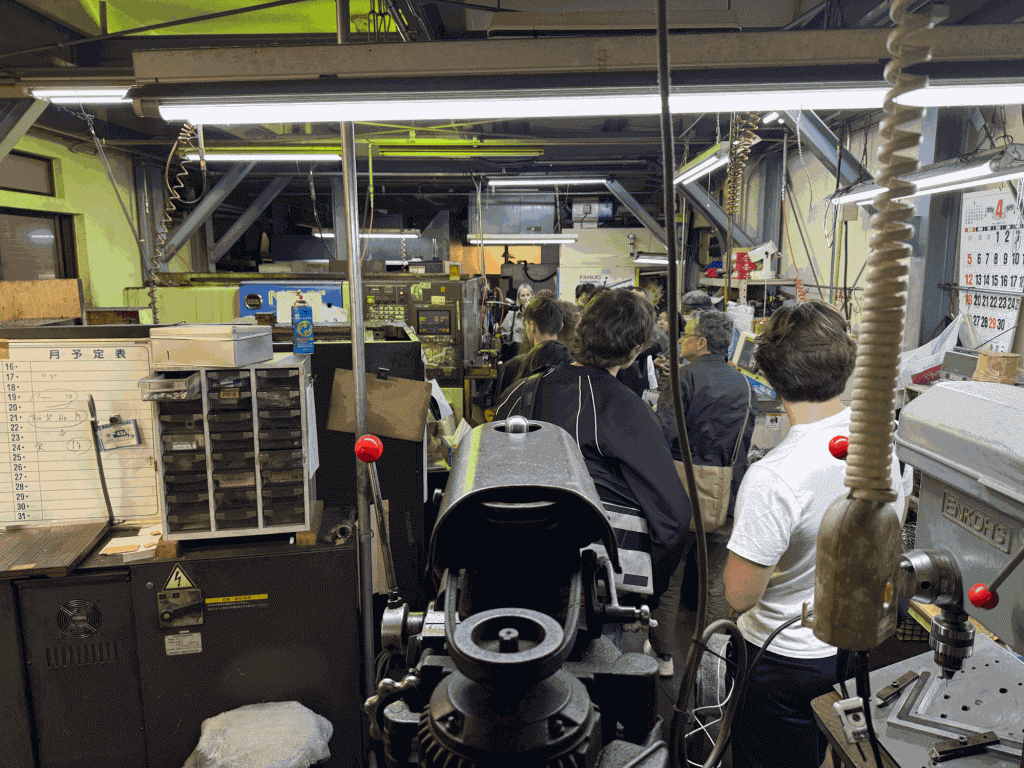
敷地調査で、その場で町工場の中の様子を実際に見学することができた。
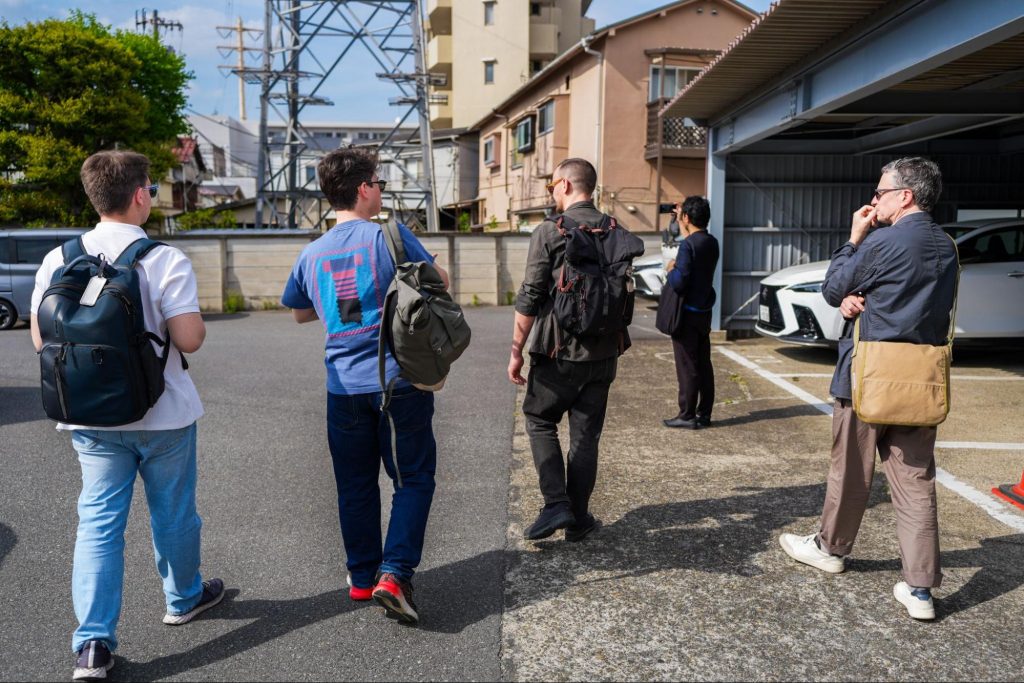
周りより地盤が高い駐車場に、新しい建築の可能性を考える学生と教授たち
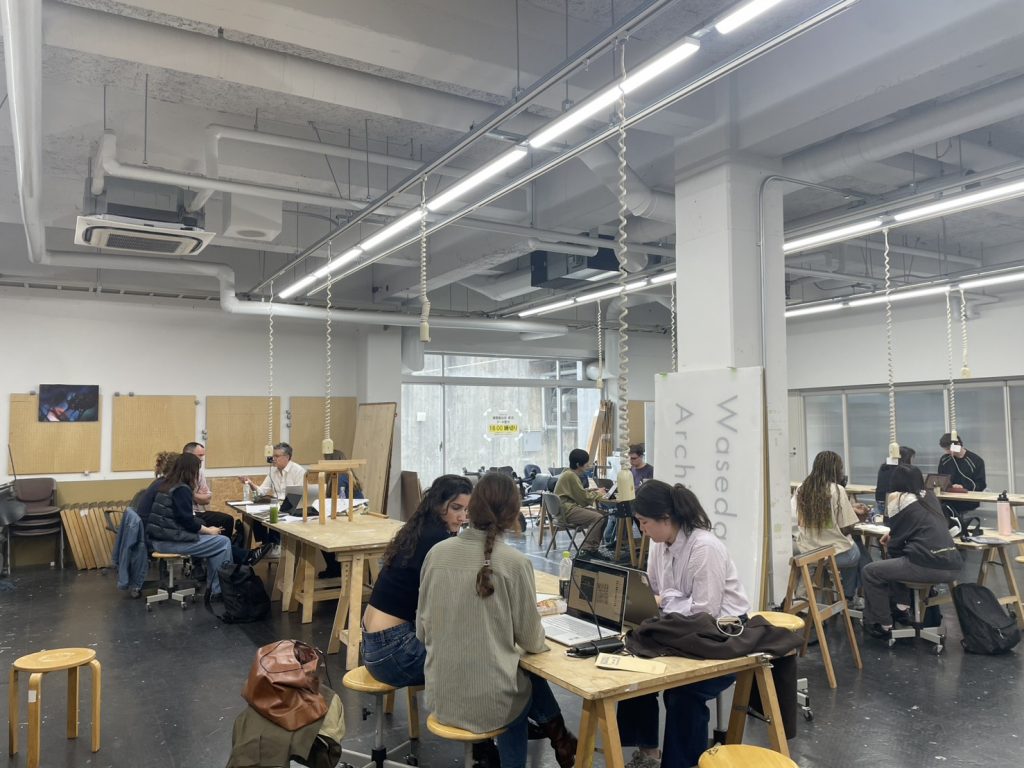
敷地調査後は、それぞれのグループに分かれて、スタジオにてプロジェクト案を相談
【建築見学】
くりらぼ多摩川
森山邸
PiOPARK
Karimoku Commons
「BONUS TRACK」
国立代々木競技場
仲建築設計スタジオ etc
「BONUS TRACK」は住宅街の中に溶け込む商店街。小さな飲食店やカフェ、本屋などが周囲の家々と同じ高さで並んでいるため、街並みに自然と調和する。下北沢駅南西口の遊歩道から続く公園の奥に位置するこの場所では、散歩の合間に立ち寄って休む人や、本を読みながらのんびりくつろぐ人たちが、穏やかなひとときを楽しんでいた。
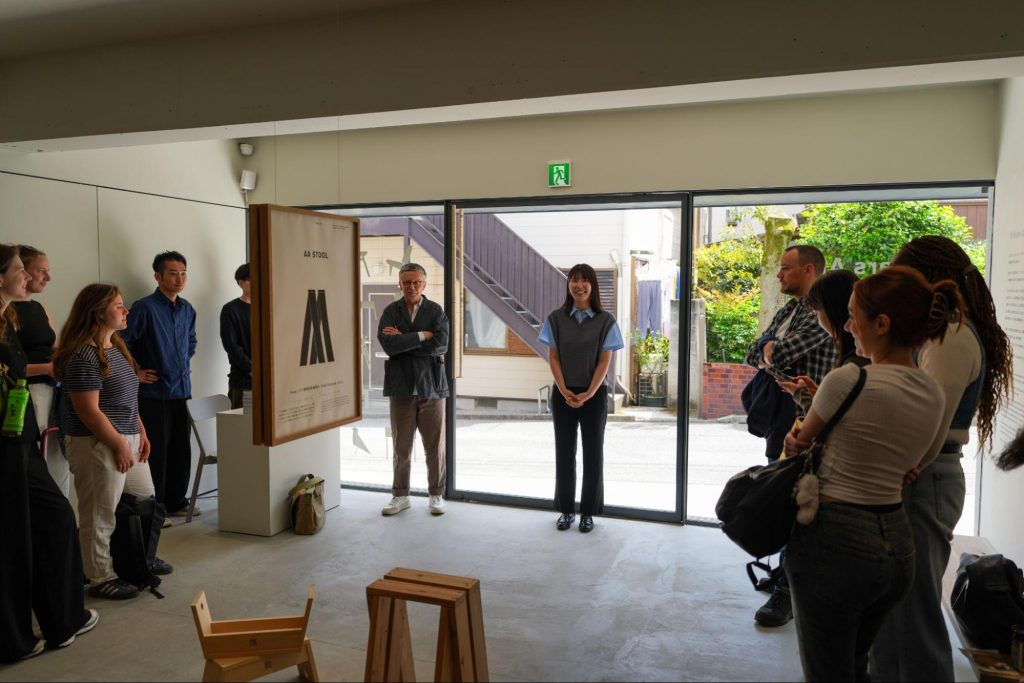
「Karimoku Commons Tokyo」は、東京・目白台に構えるカリモク家具のコミュニティスペース。その一角で、東日本大震災をきっかけに誕生した石巻工房の設立15周年を記念した展示『15 Years After 石巻工房の歩みと15の家具』が開催されていた。被災地での「自らつくる」という実践から生まれた15点の家具が並ぶ空間では、ものづくりの思想と地域との深いつながりを静かに感じることができた。
低密度でありながら人と人が自然と交わる場の空気感や、「自らつくる」という能動的な思想は、今回の設計提案における重要なヒントとなったグループも多いように感じる。
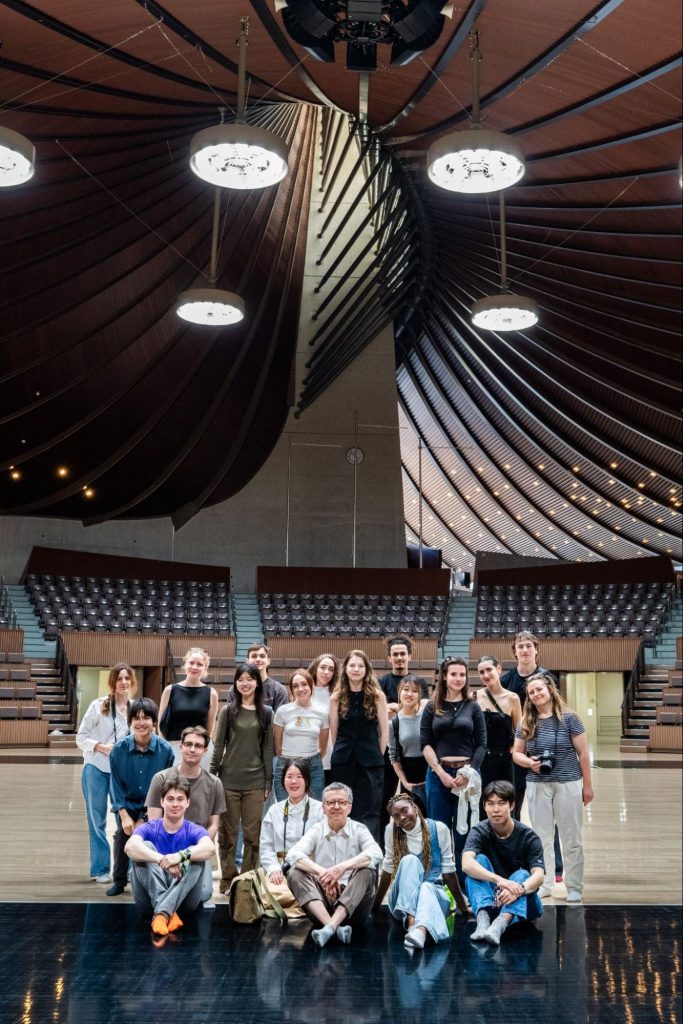
他にも、建築家仲俊治氏による自邸と設計スタジオのご案内や、観客のいない国立代々木競技場内部の見学など、めったに体験することのできない空間に触れる貴重な体験となった。
【Architectural Site Visits】
Kurilabo Tamagawa
Moriyama House
PiOPARK
Karimoku Commons
“BONUS TRACK”
Yoyogi National Gymnasium
Naka Architects’ Studio etc
“BONUS TRACK” is a shopping street that blends seamlessly into a residential neighborhood. Small restaurants, cafés, and bookshops line the street at the same height as the surrounding houses, harmonizing naturally with the townscape. Tucked at the end of a park that extends from the promenade at Shimokitazawa Station’s southwest exit, the space was filled with people enjoying quiet moments; some stopping by for a rest during a walk, others leisurely reading books.
“Karimoku Commons Tokyo” is a community space run by Karimoku Furniture in Mejiro, Tokyo. An exhibition titled 15 Years After: The Journey of Ishinomaki Laboratory and 15 Pieces of Furniture was being held to mark the 15th anniversary of Ishinomaki Laboratory, which was born in the wake of the Great East Japan Earthquake. The space showcased 15 furniture pieces born from the practice of “making things yourself” in the disaster-affected region, offering a quiet yet profound sense of the philosophy of craftsmanship and its deep ties to the local community.
Many groups seemed to find important hints for their design proposals in the atmosphere of low density spaces where people naturally come together, and also in the active, hands-on philosophy of “making things yourself.”
In addition, we also had a guided tour of architect Toshiharu Naka’s own home and design studio, as well as a rare look inside the Yoyogi National Gymnasium with no audience present. All of the visits were truly valuable encounters with spaces that few ever get the chance to experience.In addition, we also had a guided tour of architect Toshiharu Naka’s own home and design studio, as well as a rare look inside the Yoyogi National Gymnasium with no audience present. All of the visits were truly valuable encounters with spaces that few ever get the chance to experience.
【最終プレゼンテーションに向けて】
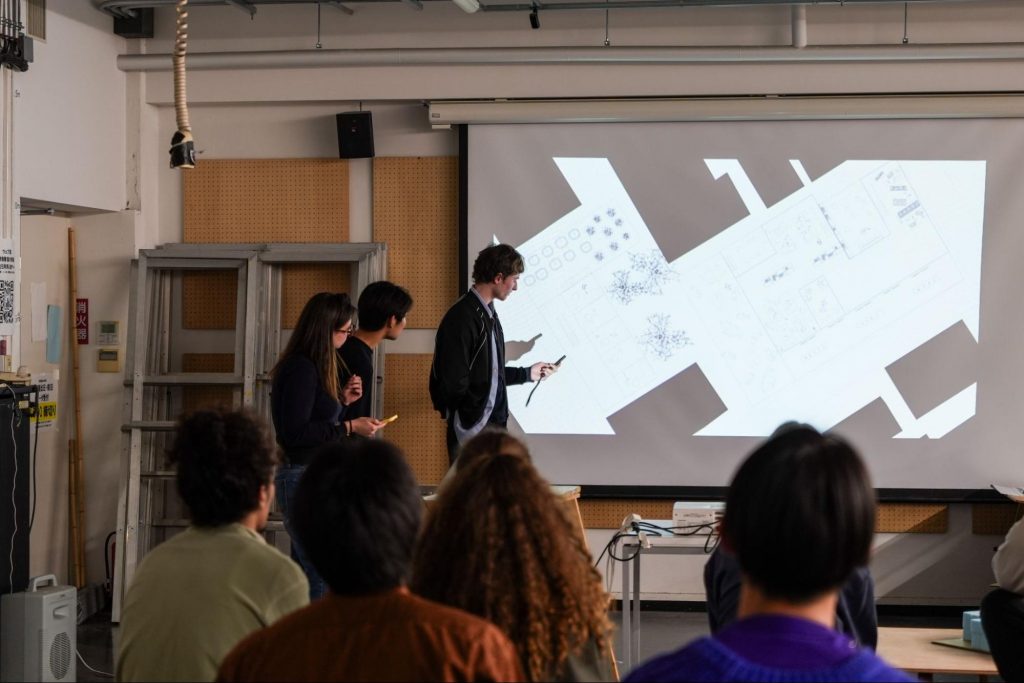
中間発表では、両大学の教員から根本的な部分から表現の細部にいたるまでのさまざまな視点でのフィードバックをもらった。最終発表にむけてはそれらを参考に、模型や図面のみならず手書きパースやスケッチ、さらにはAI生成イメージなども取り入れ、それぞれのグループの提案が磨かれていった。
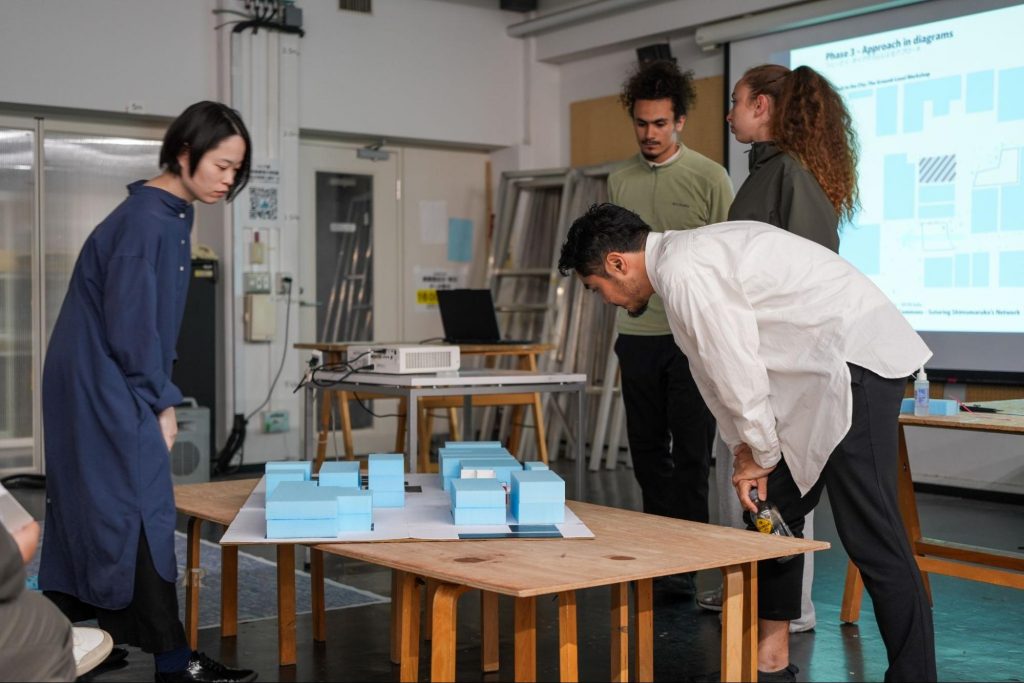
最終発表では1/50や1/100、1/200といった、さまざまなスケールの模型で各グループの対象敷地とその周辺を表現し、その周りを囲みながら講評が行われた。
学生と技術者が知識と技術を共有しながら暮せるレジデンスを含むコミュニティスペースや、町工場と地域やインフラが抱える問題を包括的に解決するための建築など、グループごとに個性の異なる提案が揃った。
都市計画の教授と建築家兼アーティストの方も講評ゲストとしてお迎えし、街の歴史的背景を踏まえた深い議論も展開された。それぞれの敷地にそれぞれの建築が建つ理由を追求する視点は、多くの学生にとって新鮮な気づきとなったように感じる。発表後はグループ間で互いの作品を見せ合い、活発な交流が生まれた。
2週間の共同作業の中で、言葉や文化の壁は薄れていき、ワークショップ公判では自然と学生同士の笑い声がよく聞こえるようになったように感じる。建築や都市、その計画に対する考えや向き合い方には大きな違いもあった。それは決してよくないことではなく、むしろそういった考えの違いが素直に衝突することによって生まれるアイデアもあるという気づきがあった。フランスから遥々日本まで来てくれた学生や教授方と一緒に楽しく真面目にワークショップに取り組めたことは、かけがえのない経験となった。
【Toward the Final Presentation】
At the mid-term presentation, professors from both universities offered feedback from a wide range of perspectives, covering everything from fundamental concepts to the finer details of expression. Building on that input in the lead-up to the final presentation, each group refined their proposals by incorporating not only models and drawings, but also hand-drawn perspectives and sketches, and even AI-generated images.
In the final presentation, each group expressed their site and its surroundings through models at various scales — 1/50, 1/100, and 1/200 — and critique sessions were held with everyone gathered around them.
— the proposals varied widely, each group bringing its own distinct character.
A professor of urban planning and an architect-artist were also welcomed as guest critics, and in-depth discussions unfolded that drew on the historical context of the city. The perspective of pursuing *why* a particular piece of architecture belongs on a particular site seemed to come as a fresh insight for many of the students. After the presentations, groups shared their work with one another, sparking lively exchanges.
Over the two weeks of working together, the barriers of language and culture gradually faded, and as the workshop progressed, it felt like students’ laughter could be heard more and more naturally throughout the space. There were also significant differences in how each side thought about and approached architecture, the city, and urban planning. This was by no means a negative thing; if anything, there was a realization that when differing perspectives meet head-on, new ideas can emerge from that very collision. Being able to engage with the workshop earnestly and joyfully alongside students and professors who traveled all the way from France to Japan was an irreplaceable experience.