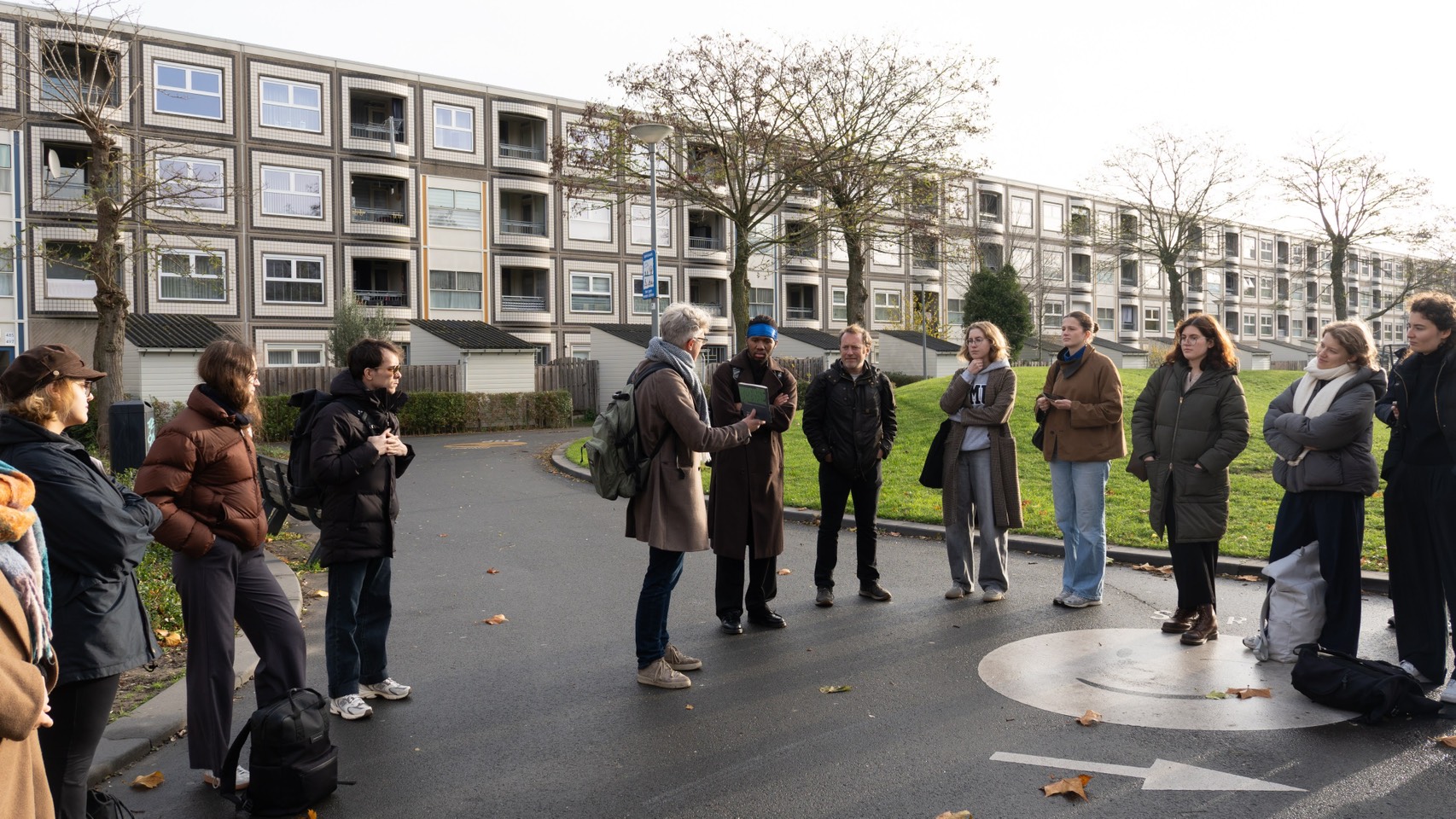
2025年11月、オランダにて、約1週間に渡るワークショップが行われた。
本ワークショップは、2024年6月の神奈川でのハノーファー大学(LUH)との共同研究を継承したものである。今回は、デルフト工科大学を加えた3大学の教授・学生陣を交えて開催された。
日本では人口減少と都市集中が進み、地方の空き家やサービス低下が深刻化する一方、ドイツは分散型の経済・インフラ政策を進め、オランダは干拓や生態系管理の経験を基に海面上昇や住宅・交通問題に取り組んでいる。日本・ドイツ・オランダに共通する都市と地方の関係性に起因する住宅、移住、地域再生の課題を、建築的視点から研究・実践し、戦略的提案へとつなげることを目的として、講義やフィールドワークを通じて住宅・公共施設・地域再生を建築的に検討し、図面や模型などの成果に結実させる。
はじめに、11/11,12日の2日間にわたってデルフト工科大学 建築構築環境学部棟にてワークショップが行われた。教授陣によるレクチャー、建物見学を行った後、各大学の学生で構成される3〜4名のグループに分かれてディスカッションを行った。各国の住環境を横断する問題意識について話し合い、各チーム独自のテーマを設定して提案を行なった。提案の中には、例えばドイツにおけるコーポラティブ・ハウジングの手法をベースにしながら、日本の障子や襖といった建具を用いて自由度の高い空間構成を作るといったアイデアがあるなど、多様なバックボーンを持つ学生が集まることによる利点が生かされたワークショップとなった。
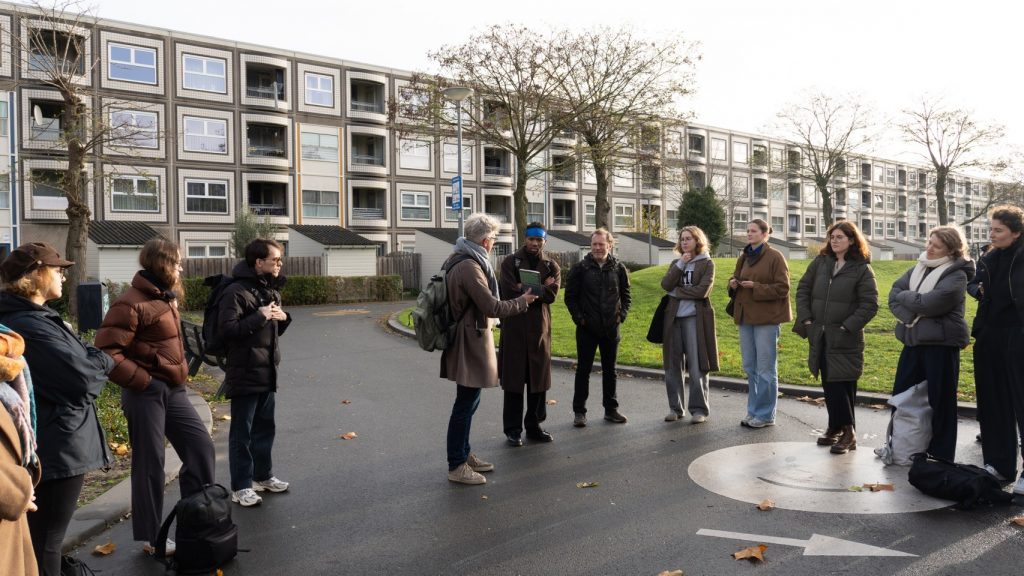
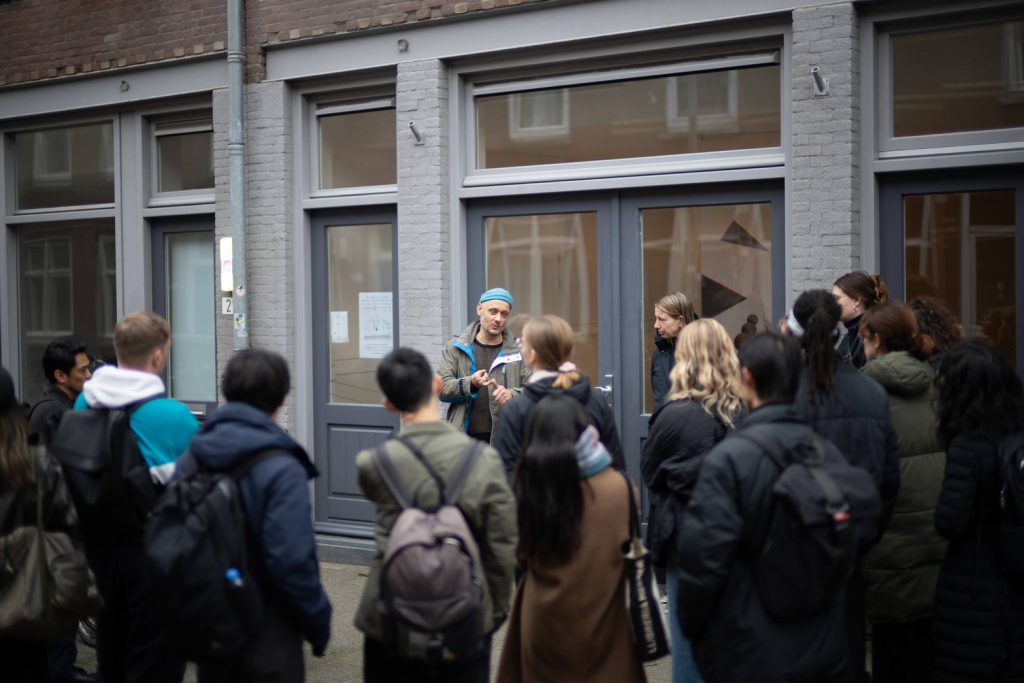
↑実地見学・屋外レクチャーの様子
3日目以降はハノーファー大学の教授・学生陣とともに、オランダ各地の集合住宅や公共建築、設計事務所を訪問し、フィールドワークを行なった。
はじめにTilburgの旧機関車車庫を図書館にリノベーションしたプロジェクトである、「LocHal」を訪れた。この建築を特徴付けている要素の一つは、巨大な車庫空間を視覚的・空間的に分節するように吊り下げられた、高さ20mを超えるカーテンだ。これをデザインしたのは、アムステルダムのテキスタイルデザインオフィス、Inside Outsideである。
同日、学生達はInside Outsideの事務所を訪れ、レクチャーを受けた。一般にテキスタイルという分野から想像される領域を大きく超えた、社会的・空間的な視座に富むプロジェクトや作品の数々は、大変刺激的かつ魅力的なものであり、学生達の間には多角的な議論が飛び交った。
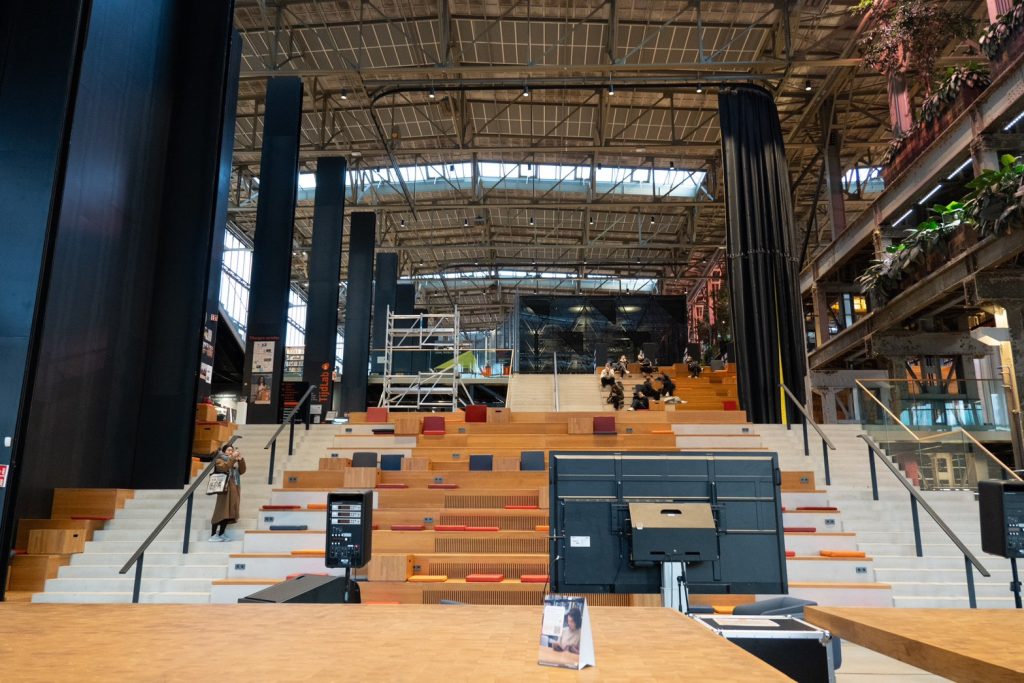
↑LocHalの大階段
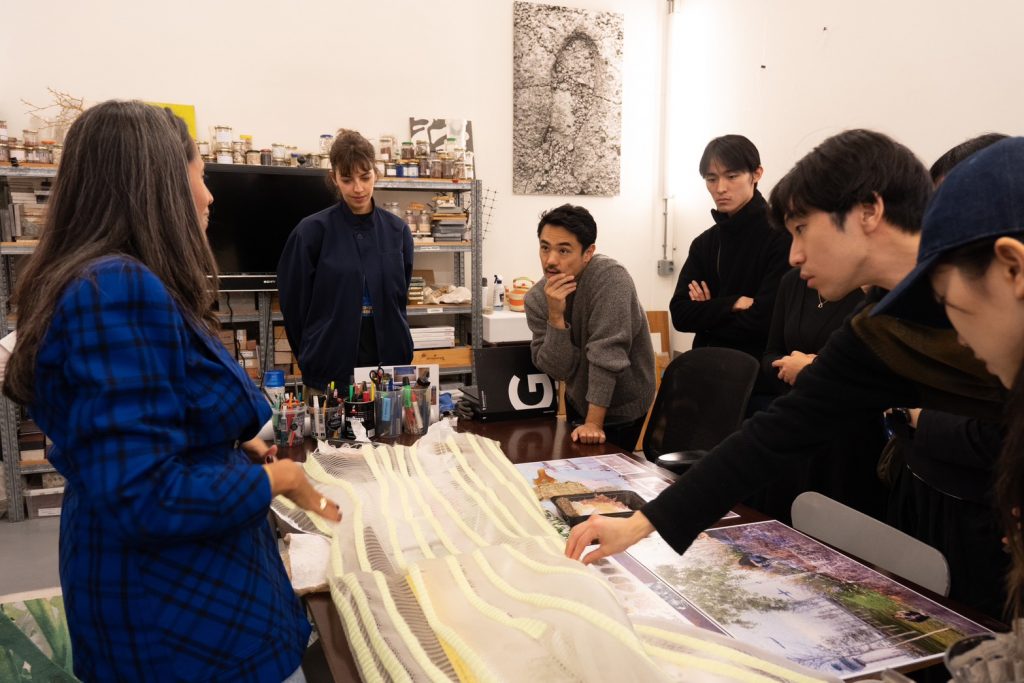
↑Inside Outsideでのレクチャー
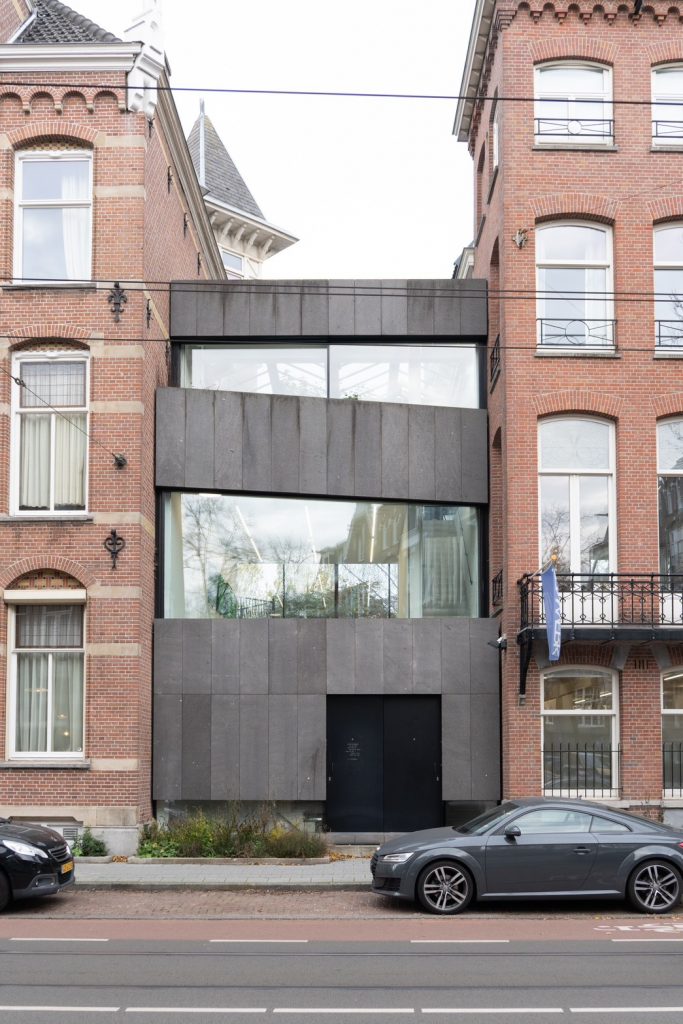
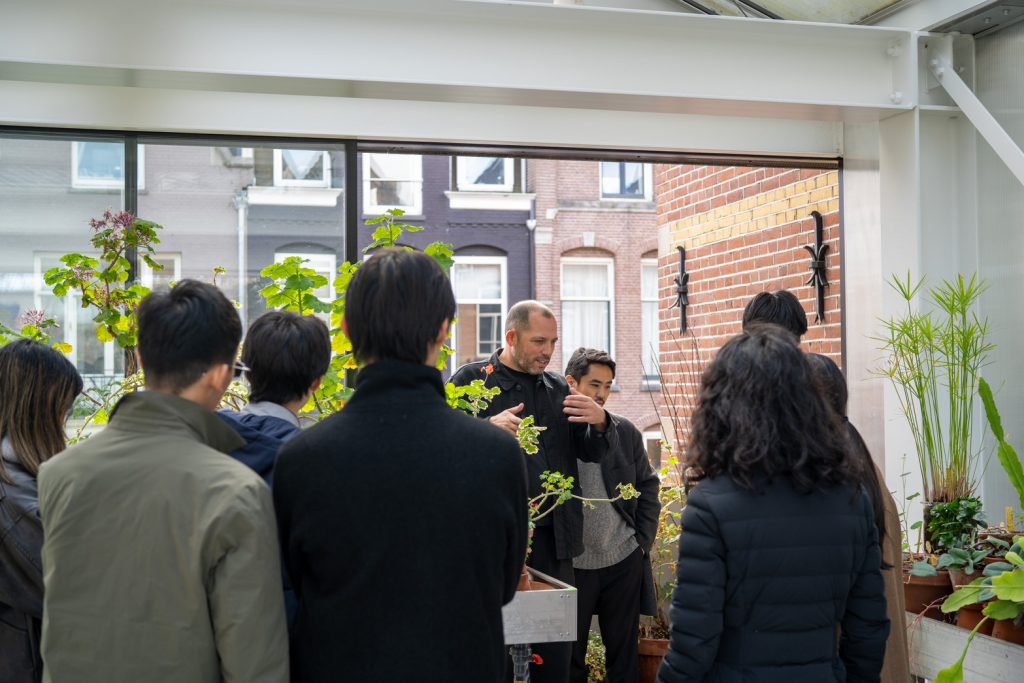
また、Inside Outsideの関わった別のプロジェクトの見学もかなった。既存の2つの建築に一部貫入しながら挿入された鉄骨とガラスの建築は、特殊なプロジェクトでありながら、ミニマルかつユーモラスな空間を呈しており、既存の建物や街区の景観を大切にするアムステルダムの風土の中において生まれた、日本では見られないような角度での機知に富んだ設計に触れることができた。
他にも、アムステルダムの50人規模のハウジング・コーポラティブ、「De Nieuwe Meent」をはじめとする、3つの集合住宅のプロジェクトにおいてそれぞれ教授やプロジェクト関係者によるレクチャーを受け、現代の住宅問題と、それに対応する多様な「すまい」のあり方を実際に目にしながら学んだ。
残りの日程では、小林研究室の学生のみでさらに多くの見学を行うことができ、OMAロッテルダム事務所の見学や、世界で最も広く出版された建築写真家の一人であるIwan Baan氏の事務所を訪れることができた。日々、知らずのうちにも少なからぬ数の彼の写真を目にしてきた私たち学生にとって、彼と交わした会話はこの先忘れられないものとなった。
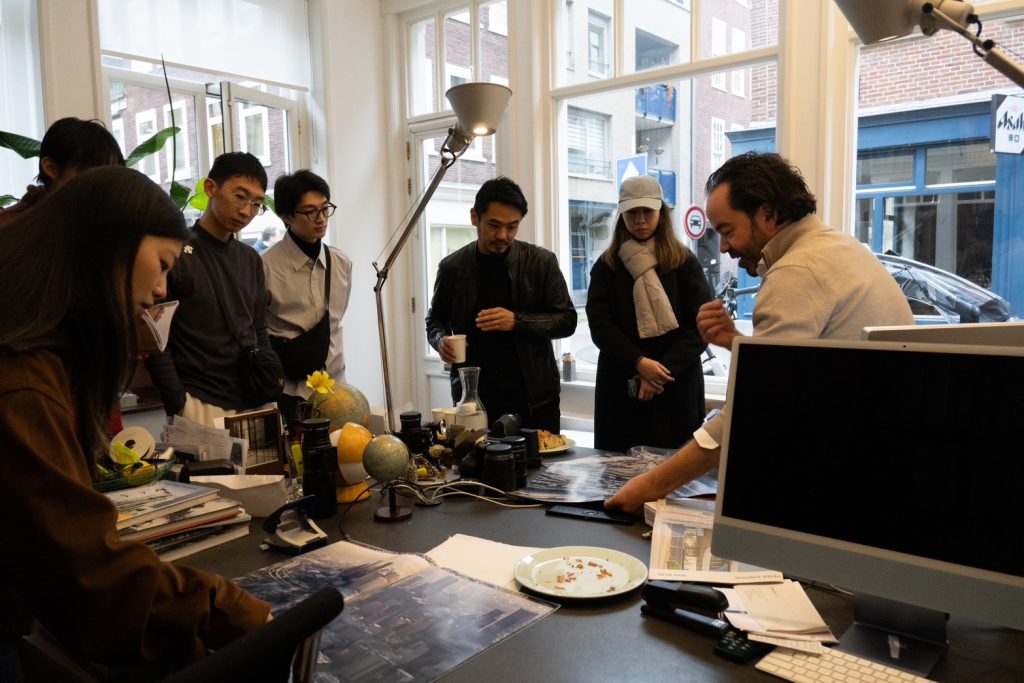
↑Iwan Baan氏のオフィスにて
今回のワークショップは、デルフト工科大学・ハノーファー大学・早稲田大学の教授陣によるレクチャーを受けながら、オランダ・ドイツ・日本を拠点とする多様なバックグラウンドを持つ学生たちが議論をすることで、住空間をめぐる共通の課題を炙り出しながら、各人の持つ固有な視点によってその解決策を考えることのできる、実のつまった時間となった。
また、大学内でのワークショップだけでなく、様々な実地でのレクチャー・見学ができたのも大きな学びとなった。特に、集合住宅に限らず、テキスタイルから公共建築に至るまで幅広く事例を見ることができたことが大きな収穫であった。当初のワークショップのテーマである、住まいのありかたの議論は、地域や都市のデザインと相互に結びついているものである。私たちは、滞在中、街の様々な場所で繰り広げられる市民の多様な生活を目にすることで、住宅だけが住に寄与するのではなく、地域全体、都市全体が住を作っているという視座を持つことができた。
経済的な制約や環境的な課題を無視できない現代の状況の中で、いかに住環境を作り、地域をデザインしていくことができるか。建築や都市のデザインを通じて、個々人の心を豊かにし、地域を豊かにし、地球規模の環境の豊かさをつくることができるか。今回のワークショップで得られた知見が、今後の研究や制作への大きな足掛かりとなることは間違いない。
In November 2025, a week-long workshop was held in the Netherlands.
This workshop was a continuation of the collaborative research conducted in Kanagawa in June 2024 with Leibniz University Hannover (LUH). This time, it was organized with the participation of professors and students from three universities, including Delft University of Technology.
In Japan, population decline and urban concentration are progressing simultaneously, leading to serious issues such as vacant houses and declining services in rural areas. In contrast, Germany is promoting decentralized economic and infrastructure policies, while the Netherlands is addressing challenges such as rising sea levels, housing, and transportation based on its experience in land reclamation and ecological management. The workshop aimed to examine and develop strategic proposals from an architectural perspective on issues related to housing, migration, and regional revitalization—issues that stem from the relationship between urban and rural areas shared by Japan, Germany, and the Netherlands. Through lectures and fieldwork, participants explored housing, public facilities, and regional regeneration, producing outcomes in the form of drawings and models.
The workshop began with two days (November 11–12) at the Faculty of Architecture and the Built Environment at Delft University of Technology. After attending lectures by professors and touring the building, students were divided into groups of three to four members, each composed of participants from different universities, to engage in discussions. They shared perspectives on cross-national issues in living environments and developed their own themes for proposals. For example, one proposal combined the concept of cooperative housing in Germany with traditional Japanese elements such as shoji and fusuma to create flexible spatial configurations. The workshop demonstrated the advantages of bringing together students with diverse backgrounds.
From the third day onward, participants conducted fieldwork across various locations in the Netherlands together with professors and students from Leibniz University Hannover, visiting collective housing projects, public buildings, and design offices.
The group first visited “LocHal” in Tilburg, a project that renovated a former locomotive shed into a library. One of its defining features is a series of curtains over 20 meters in height, suspended to visually and spatially articulate the vast interior space. These curtains were designed by Inside Outside, a textile design studio based in Amsterdam.
On the same day, the students visited the office of Inside Outside and attended a lecture. The projects and works presented went far beyond the conventional scope of textile design, offering rich social and spatial perspectives. They were highly stimulating and engaging, sparking multifaceted discussions among the students.
The group also had the opportunity to visit another project involving Inside Outside. This structure, composed of steel and glass and partially inserted into two existing buildings, presented a unique yet minimal and humorous spatial expression. It offered insight into a design approach deeply rooted in Amsterdam’s cultural context, where the existing urban fabric and streetscape are carefully respected—an approach that differs significantly from what is typically seen in Japan.
In addition, participants visited three collective housing projects, including “De Nieuwe Meent,” a housing cooperative for around 50 residents in Amsterdam. Through lectures by professors and project members, they gained firsthand insight into contemporary housing issues and diverse ways of living.
During the remaining days, students from the Kobayashi Laboratory conducted further visits, including the OMA Rotterdam office and the studio of Iwan Baan, one of the most widely published architectural photographers in the world. For the students, who had unknowingly encountered many of his photographs in their daily lives, the opportunity to speak with him became an unforgettable experience.
This workshop brought together students from diverse backgrounds based in the Netherlands, Germany, and Japan, who engaged in discussions while learning from lectures by professors from Delft University of Technology, Leibniz University Hannover, and Waseda University. It provided a rich and meaningful experience, enabling participants to identify shared challenges surrounding living environments and to explore solutions through their unique perspectives.
Moreover, the opportunity to participate not only in university-based workshops but also in various on-site lectures and visits was a significant learning experience. In particular, being able to study a wide range of cases—from textile design to public architecture, beyond collective housing—was highly valuable. The workshop’s central theme, the nature of dwelling, is inherently linked to the design of regions and cities. By observing the diverse ways in which people inhabit urban spaces throughout their stay, participants came to understand that housing alone does not define living; rather, entire regions and cities collectively shape the experience of dwelling.
In today’s context, where economic constraints and environmental challenges cannot be ignored, how can we create living environments and design regions? Through architecture and urban design, how can we enrich individual lives, strengthen communities, and contribute to the well-being of the global environment? The knowledge gained through this workshop will undoubtedly serve as a significant foundation for future research and design work.